
Do You Really Need a Website?
Published on Thursday, January 15th, 2026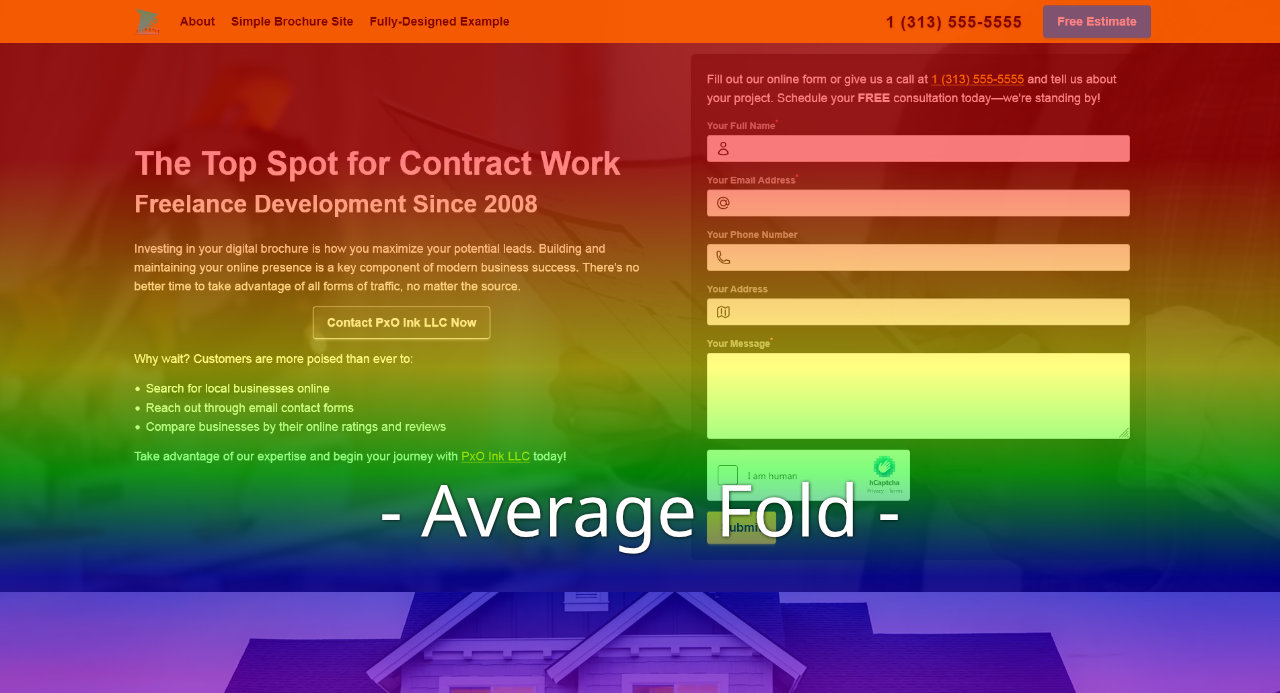
In-Person: Now Online!
A client once asked if they really needed a website.
Historically, humanity has done almost all of its business in-person. If you needed a new piece of equipment for your company, you would go to a shop that specialized in that equipment. You might look up a few names in the phone book to get a rough idea of the landscape, but you depended heavily on advertisements and word-of-mouth. There was still a little bit of uncertainty, maybe you weren't sure which company had the best product. Often, that first impression made the decision for you. Walking into the store, you might be greeted with marketing material, maybe a handful of demonstrations, a kind and energetic salesperson (maybe the owner.) In your pocket was your payment, and in your mind an idea of why you were there in the first place: to make a purchase. Shopping around meant looking elsewhere, and that took time; so when you made the trek to a specific store, you went with purpose.
When the World Wide Web became a medium by which you could visit a business from the comfort of your home or office, everything changed. We started to work and shop remotely. Suddenly, you didn't have to do all of your business in-person, and you might be less inclined to make a purchase right then. There's no more phone books. Now we have search engines and large language models. Gone are the days of kind and energetic salespeople on the floor. You have all the time in the world to make a decision about which company has the best products or services. That means, as a business, it's much harder to make a sale. You have to make your first impression, your pitch, and your conversion within just moments of your customers visiting you online.
Times may have changed, but that first impression is still the most valuable part of the experience. If you don't invest enough in your website, or you don't invest at all, your customers will judge you accordingly. You may never be aware of that lost potential. Think about how you judge stores that don't take care of their property or their employees. You generally find any excuse to get out. In turn, whether online or in-person, you would never want your company to appear dirty, your marketing materials to look unprofessional, or your demonstrations to fail or be unreliable. The goal is always to convey professionalism and convert paying customers in the best way possible.
If you are only catering to some of your market, and you're undervaluing the market of people who shop online, you're doing your business a disservice. Every business needs a website. One that is as valuable to them as any other aspect of their business.
Decision Analysis Paralysis
Some statistics suggest that over 90% of potential customers use the Internet in some way when making a financial decision. It has become an intrinsic part of the process of doing business to rely on the limitless potential that the Web provides for information lookup and retrieval. With nearly everyone having a computer and a Web browser in their pocket, why wouldn't they?
That limitless potential though does come with a cost. Now that customers have a plethora of options available to them from the comfort of their home, they often undergo what is known as decision or analysis paralysis. They need fast, easily available information about what products and services are good, and which ones aren't. Too many choices, or information too vague, will freeze a customer. They'd rather exit the process with you completely and move onto a competitor than figure things out.
Therefore, it's not enough just to have a website and a way to get in touch. You also need to take care to ensure that it's done properly with your business interests in mind.
The First Three Seconds
Between decision paralysis and changes in attention span, as a business owner you only have seconds to make a strong impression. It has been identified through a variety of studies and research that you have approximately three seconds to convince someone to stay on your website or click on a call-to-action to get in touch; like completing a contact form or making a phone call. That means, within the first three seconds you need to display an engaging, clear, and concise mission statement, provide an incentive for potential customers to learn more, and somehow work in a call-to-action so that by the time they've decided whether to keep going, they know the path toward conversion.
We call this area on a website the "fold" or "average fold," an homage to the days of newspaper front-pages. Your average fold needs to not only showcase everything listed here, but it also needs to load on as many devices, browsers, platforms, and form factors as possible.
Sometimes a company only really needs an online business card to meet these needs. You want people to understand who you are, what you do, and send you an email or call you. You don't need to sell products directly, update a gallery often, or keep and maintain a blog. In that case, a simple Static Business Site is really all you need.
Three seconds means your website must load quickly, and that means it needs to be expertly crafted. A smaller site, like the aforementioned Static Business Site, is able to hit these metrics quite easily because they are finely tuned and have zero overhead on rendering content. They're fast. Others, like dynamic sites, website applications, and e-commerce stores, need a craftsman to ensure that performance is prioritized and that the experience is reliable. When they're not handled with care, they're slow.
Often the argument of using social media as a replacement for a website comes up. Relying on social media here can be disastrous, because as a business owner, you have zero control over how social media portrays your company or message. It's not worth the savings to put the future of your business in the hands of social media giants.
Reviews, Testimonials, and Ads
We also know that money is really precious to customers and even small financial decisions can be difficult to make. That's why such a large portion of customers, especially those who search for businesses locally, leverage features like reviews and testimonials on a company's website, search engine business profiles, and maps reviews as part of their decision making process. This is even true for word-of-mouth sales. Most word-of-mouth recommendations are filtered through the website experience too, often confirming or disproving the suggestion. Even still, some customers rely entirely on sponsored ads to make their decisions for them.
Without a website, you can't make effective use of curating this information and funneling that traffic into a single conversion target.
The Call-To-Action
One of the more recent research topics in digital marketing has been how younger generations convert. Millennials and Gen Z both suffer from an anxiety known as Phone Call Aversion. This makes contact forms, text messages, and other forms of digital communication critical to the conversion experience. While plenty of people still rely on phone calls to do business and prefer the personal touch, a good number have transitioned to digital means, and a website allows you capture those conversions on your terms.
Why Bother?
Websites, like most marketing, do not always make it clear how much value they provide a business. However, they're transparent in their cost. This is often why businesses choose run-of-the-mill or low quality page builders, because even though they over-promise and under-deliver on the website experience, they're cheap. Why bother with anything else?
Sometimes businesses have had poor experiences in the past with a page builder, or they hire an uneducated or unqualified developer. This can directly influence their valuation of websites, but it's ultimately a trap. Like bespoke crafted tools or equipment, a well-made website backed by expertise functions completely different than cheaply made alternatives. The reliability of your business depends on the reliability of your website.
Ultimately, misunderstanding the value in investing in your web or online storefront is a critical mistake and often leads to hidden or silent failure. The kind of mistake that leads to unrealized revenue.
If your business is looking to properly invest in a website, is struggling with an existing website, or you just want to connect more on this topic, contact PxO Ink LLC today.